The Most Misleading Property Number in Australia Right Now

Australia's property market didn't stall in May.
The national Home Value Index recorded 0.0% growth, and while that figure will inevitably generate headlines, it tells an incomplete story.
In reality, it reflects two very different markets moving in opposite directions.
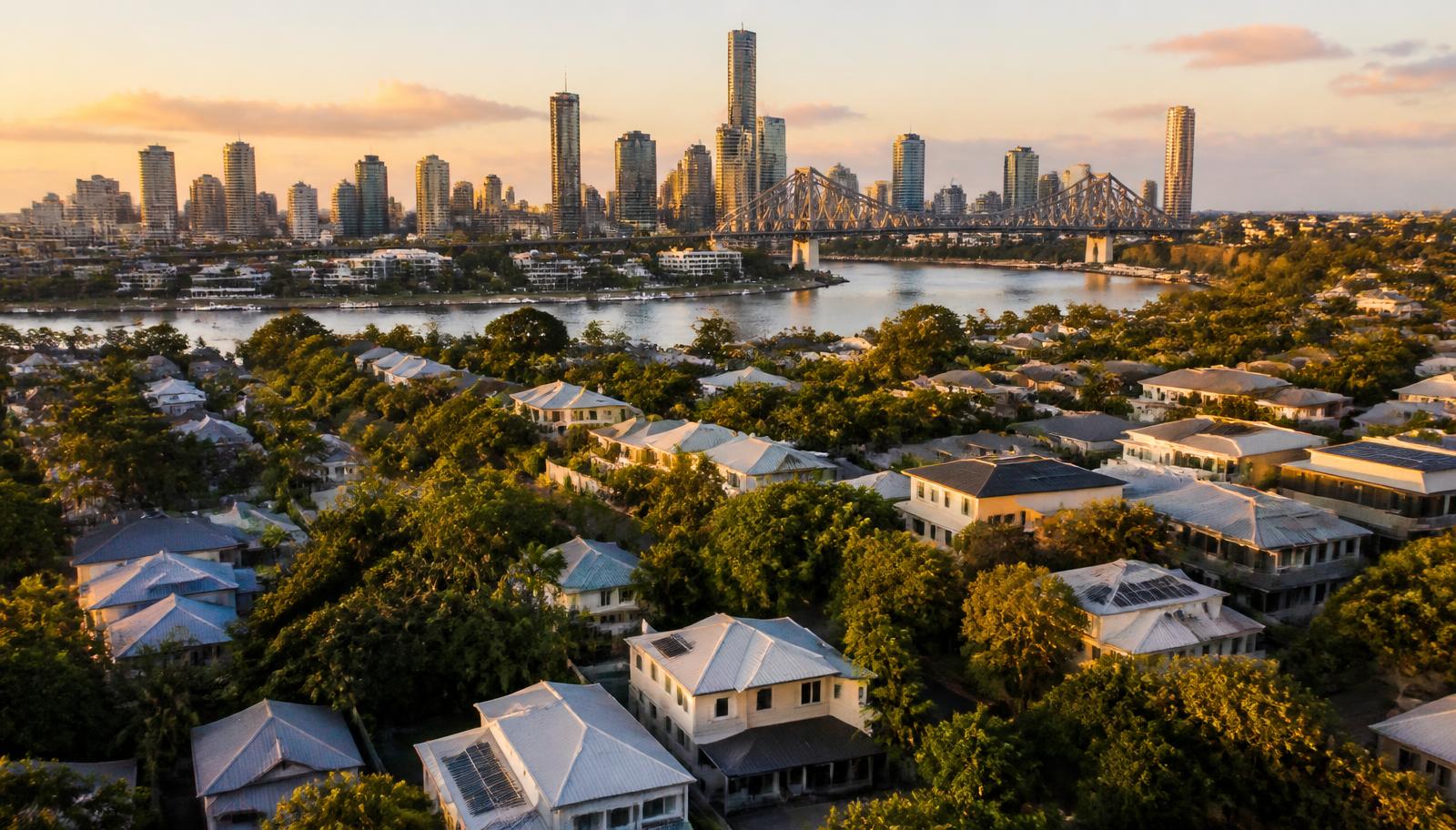
Sydney fell 0.9%, Melbourne fell 0.8%, while Brisbane recorded 0.9% growth.
Combined, they produce a flat national figure that accurately describes very little, particularly for those making property decisions in Brisbane.
It's a timely reminder that national averages rarely tell the full story. Property markets are inherently local, and increasingly, Brisbane is operating to its own rhythm.
A Market Defined by Divergence
Over the past six months, Brisbane has consistently outperformed Australia's two largest capitals.
While Sydney and Melbourne have experienced softening conditions, Brisbane has continued to record steady monthly growth, underpinned by a combination of constrained supply, strong underlying demand and a fundamentally different buyer profile.
That doesn't suggest Brisbane is immune to broader economic forces. In fact, the pace of growth has moderated from its March peak.
But there is an important distinction between a market that is slowing and one that is declining.
At present, Brisbane remains firmly in the former category.
Looking Beyond the Headlines
The challenge for many buyers and sellers is that national sentiment often outweighs local reality.
Recent consumer confidence data revealed some of the weakest attitudes towards property seen in decades. Yet much of that pessimism is concentrated in New South Wales and Victoria, where price declines are already evident.
The headlines, however, are distributed nationally.
As a result, many Brisbane buyers are arriving at inspections carrying concerns that have been shaped by markets experiencing very different conditions.
This disconnect between perception and local fundamentals is becoming increasingly evident.
Why Brisbane Continues to Perform Differently
Several factors continue to support Brisbane's resilience.
Stock levels remain below historical averages, despite a gradual increase in new listings, while demand continues to absorb quality opportunities as they come to market.
The prestige segment, in particular, is also less exposed to some of the pressures currently affecting the southern capitals.
Many buyers are equity-led rather than heavily reliant on borrowing capacity, reducing their sensitivity to fluctuations in interest rates.
At the same time, the cost of replacing quality homes continues to rise, reinforcing the value of established properties positioned on scarce and irreplaceable land.
These are structural factors, not short-term market movements.
What This Means For Sellers
For sellers, it's important not to confuse national sentiment with local conditions.
Waiting for confidence to return across the country may have little bearing on the value of a well-positioned home in Brisbane.
Today's market is characterised by measured demand, constrained supply and buyers who remain active, albeit more considered in their decision-making.
However, conditions are gradually normalising.
Brisbane's growth trajectory is moderating, and while the market remains resilient, the pace seen earlier in the year is beginning to soften.
The market isn't accelerating; it's becoming more balanced.
What This Means For Buyers
For buyers, periods of uncertainty often provide clarity.
When broader sentiment is subdued, competition can ease, even when local fundamentals remain intact.
That doesn't mean Brisbane is insulated from national trends, nor does it suggest the market will continue its current trajectory indefinitely.
It simply reinforces the importance of understanding what is driving a particular market rather than relying on national averages.
In Brisbane, those drivers remain comparatively strong.
A More Useful Question
Perhaps the better question isn't whether the Australian property market has stalled.
It's whether the market you're participating in has.
For Brisbane, the answer is currently no.
The city's growth may be moderating, but its underlying fundamentals remain intact. Supply is constrained, demand remains resilient and the prestige market continues to be supported by long-term structural drivers rather than short-term sentiment.
The gap between national perception and local reality will eventually narrow, as it always does.
The value lies in recognising it while it still exists.
At Hastings Beaumont, we believe informed property decisions are rarely made by following headlines. They're made by understanding the nuances of a specific market and applying that insight to your own position.
Because in property, context matters far more than averages.