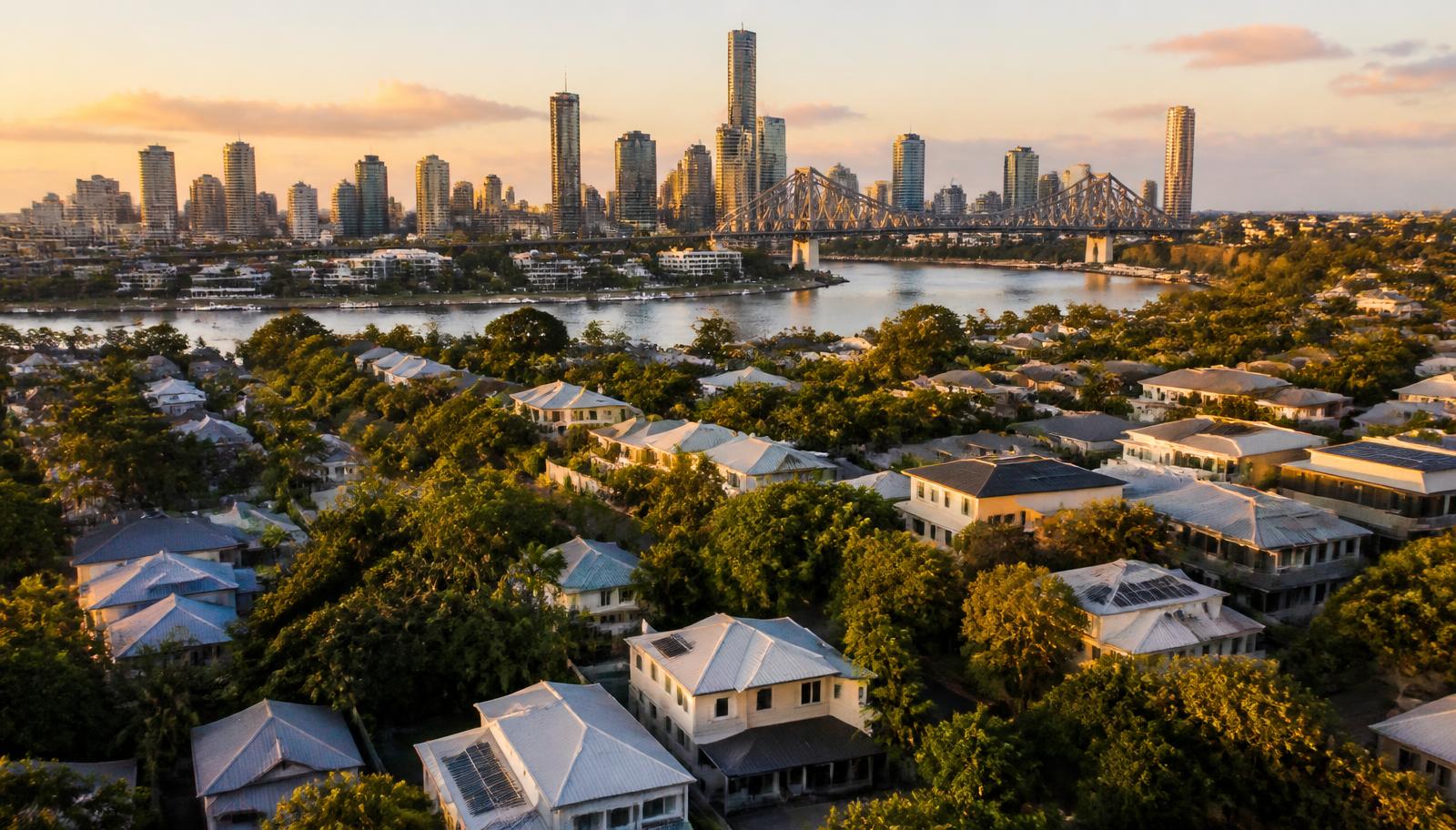
Brisbane isn't slowing down. It's just settling into a healthier pace.

Brisbane isn't slowing down. It's just settling into a healthier pace.
Every property cycle has a point where people start asking the same question:
"Have we missed it?"
After two years of exceptional growth, plenty of buyers are wondering whether Brisbane's run is coming to an end, particularly with higher interest rates, changes to investor tax policy and softer conditions in Sydney and Melbourne.
The latest PRD forecasts suggest otherwise.
House prices are tipped to rise another 8–10% over the next year, while units could climb as much as 18%. That's not the explosive growth Brisbane experienced through 2024 and 2025, but it's still remarkably strong by historical standards.
The reason is fairly simple.
We're still not building enough homes.
Supply is still the elephant in the room
Markets can absorb higher interest rates.
They can adapt to tax changes.
Confidence comes and goes.
What they can't ignore is a shortage of housing.
Despite billions being invested into new developments across South East Queensland, very little of that pipeline is detached housing. Thousands of people continue moving to Brisbane every month, but the number of quality homes hitting the market simply isn't keeping pace.
That's why prices have remained surprisingly resilient while other capital cities have started cooling.
It's basic economics. Too many buyers, not enough property.
This isn't a boom anymore. It's becoming structural.
The conversation around Brisbane has changed.
A few years ago people were asking whether Brisbane was finally having its moment.
Today, the question is whether the city has fundamentally shifted into a different phase altogether.
Population growth remains strong. Vacancy rates are still incredibly tight. Infrastructure spending continues ahead of the 2032 Olympics, and interstate migration hasn't disappeared.
None of those drivers feel particularly short term.
That's why we expect Brisbane to keep outperforming many of the southern capitals, even if the pace of growth becomes a little more measured.
The opportunity has changed
When markets move quickly, almost everything rises.
As markets mature, selection matters much more.
The next few years won't simply reward buyers for owning property. They'll reward buyers who own the right property.
Scarcity, land content, location, owner-occupier appeal and long-term demand become far more important than chasing whatever suburb is trending on social media.
That's where good buying starts to outperform lucky buying.
Our view
At Hastings Beaumont, we're less interested in predicting exactly what Brisbane will do over the next six months.
We're far more interested in understanding the forces that are likely to shape the next decade.
Right now, those fundamentals still look compelling.
Brisbane's housing shortage hasn't been solved. Demand remains strong. Supply continues to lag behind.
For buyers willing to think long term, that combination still creates genuine opportunity.
The headlines will continue to change.
The fundamentals haven't.